Fast Delivery
Delivery of products nationwide with proper coordination to ensure fast and reliable order fulfillment.
→

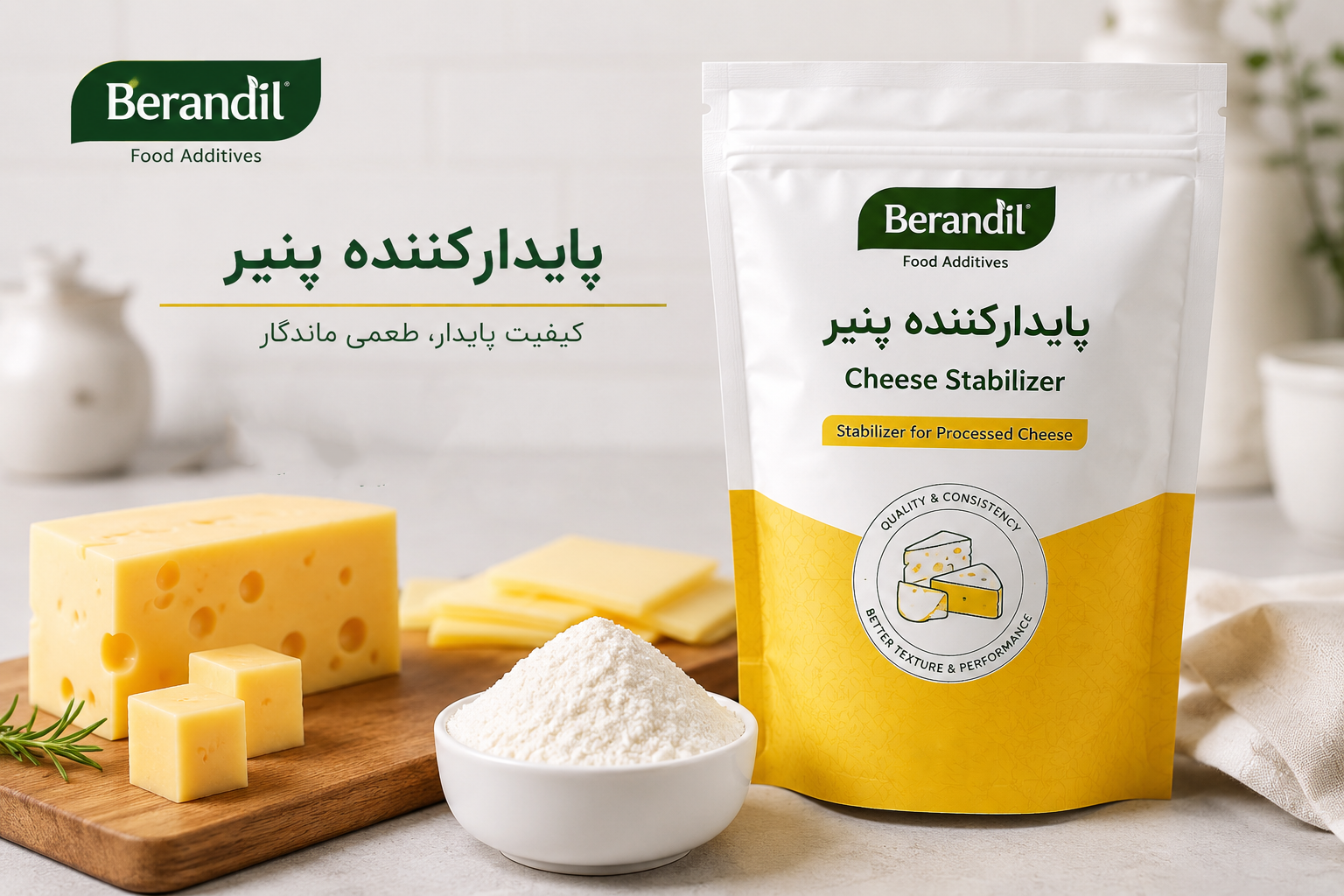
Berandil Cheese Stabilizer is a specialized and advanced blend for producing cream cheese with a soft, creamy, uniform, and stable texture. This cheese stabilizer, formulated with a precise composition tailored to the requirements of industrial processes, helps improve product structure and enhance the final product quality.
The functional formulation of Berandil Cheese Stabilizer is designed to improve consistency, increase texture uniformity, and create a desirable structure. In addition, this cream cheese stabilizer helps control syneresis and increase system stability, contributing to maintaining the product's visual, textural, and functional quality throughout its shelf life.
Berandil Cream Cheese Stabilizer is a specialized solution for manufacturers seeking to achieve cream cheese with a creamy texture, desirable consistency, and uniform structure. The functional design of this cheese stabilizer focuses on system stability, helping maintain the desired product characteristics throughout the shelf life.
Berandil Cheese Stabilizer is a professional choice for manufacturers seeking to achieve a product with a premium creamy texture, high stability, desirable consistency, and uniform quality; a reliable solution for producing cream cheese with professional standards and quality suited to the needs of competitive domestic and international markets.
Enter your order information
Berandil experts are ready to assist you
In addition to providing specialized dairy industry products, Berandil strives to make the purchasing process simpler and more professional for manufacturers through reliable delivery, dependable quality, and specialized support.
Delivery of products nationwide with proper coordination to ensure fast and reliable order fulfillment.
A strong focus on product quality and providing solutions tailored to the specialized needs of dairy industry manufacturers.
Receive specialized consultation before purchasing to select the right product for your production process and technical needs.
A transparent and reliable purchasing process that allows you to track your order with confidence and peace of mind.
| Cheese Type | Code | Dosage | Features |
|---|---|---|---|
| Cream Cheese | BCC - 001 | 0.25% |
|
| Block Cheese | BCC - 002 | 0.2% |
|
| Lactic Cheese | BCC - 003 | 0.2% |
|
| Processed Cheese | BCC - 004 | 0.2% |
|
Learn about the overall application pathway of the cheese stabilizer system throughout the production process, from raw material preparation and accurate weighing to mixing, process condition control, texture and stability assessment, and final cheese quality evaluation.
 01
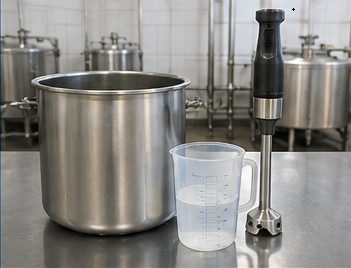
First, the raw materials used in cheese production are prepared according to the product type, formulation, and process conditions. This stage provides the foundation for proper mixing and the development of a uniform cheese structure.
 02
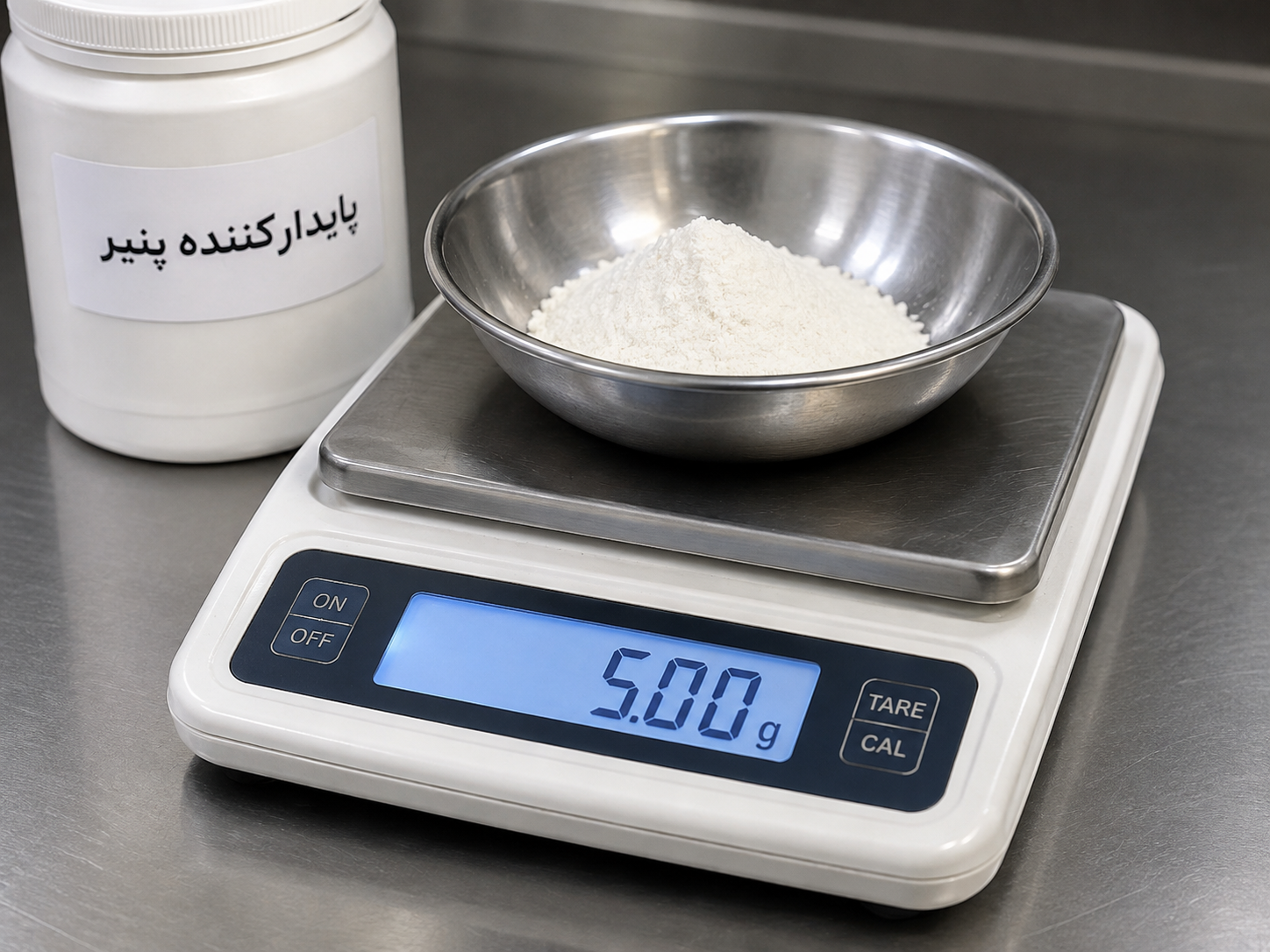
The required amount of cheese stabilizer is determined according to the cheese type, formulation, desired characteristics, and process conditions, then accurately weighed to ensure controlled performance of the stabilizing system.
 03
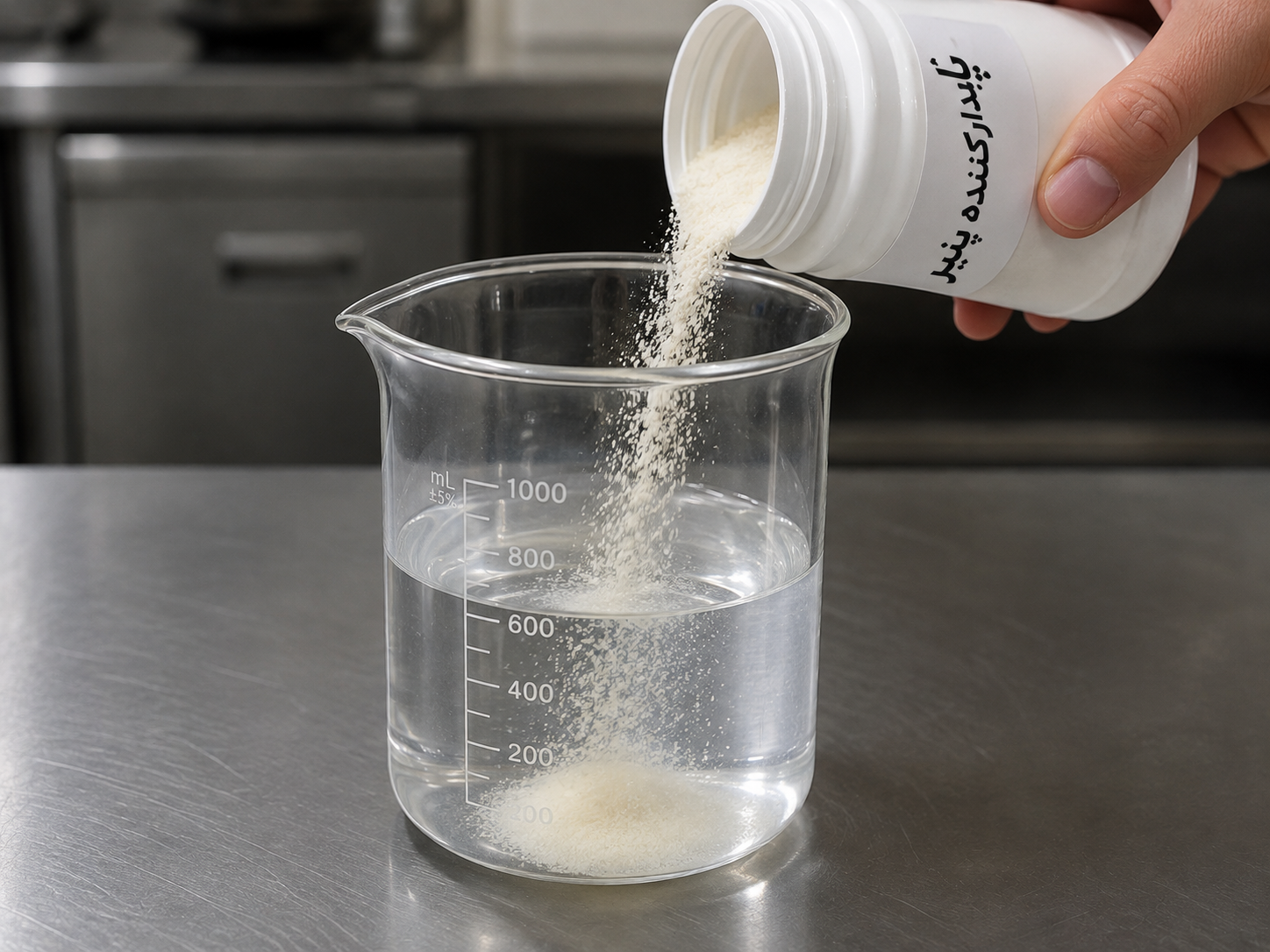
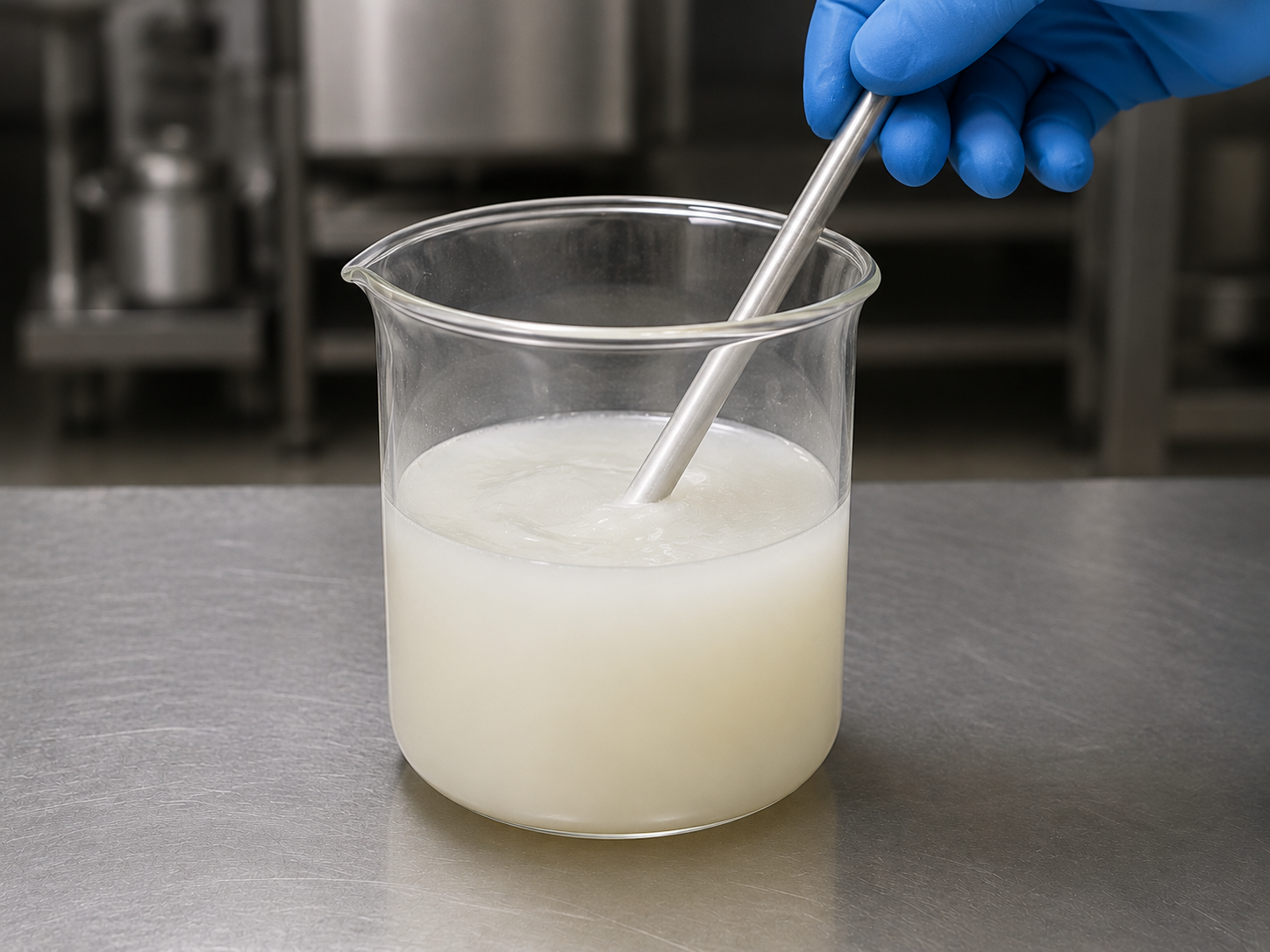
The stabilizer is added to the system under suitable conditions, followed by initial mixing to achieve uniform distribution of the stabilizing components throughout the mixture. This stage helps establish a consistent texture and proper system performance.
 04
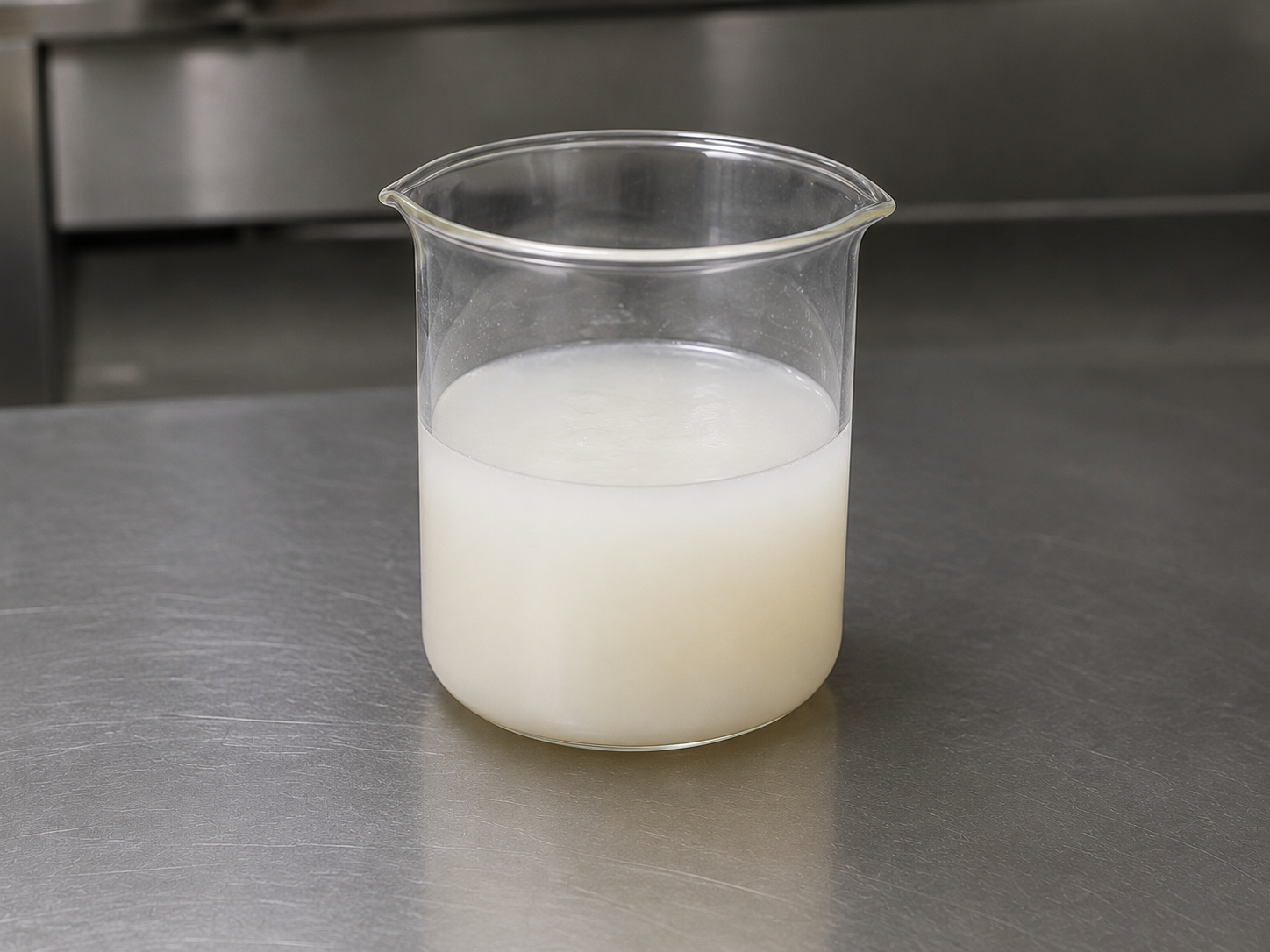
After mixing, process conditions are controlled so that the stabilizing system is distributed uniformly throughout the product, creating a more suitable structure for achieving the desired firmness, cohesion, and cheese texture stability.
 05
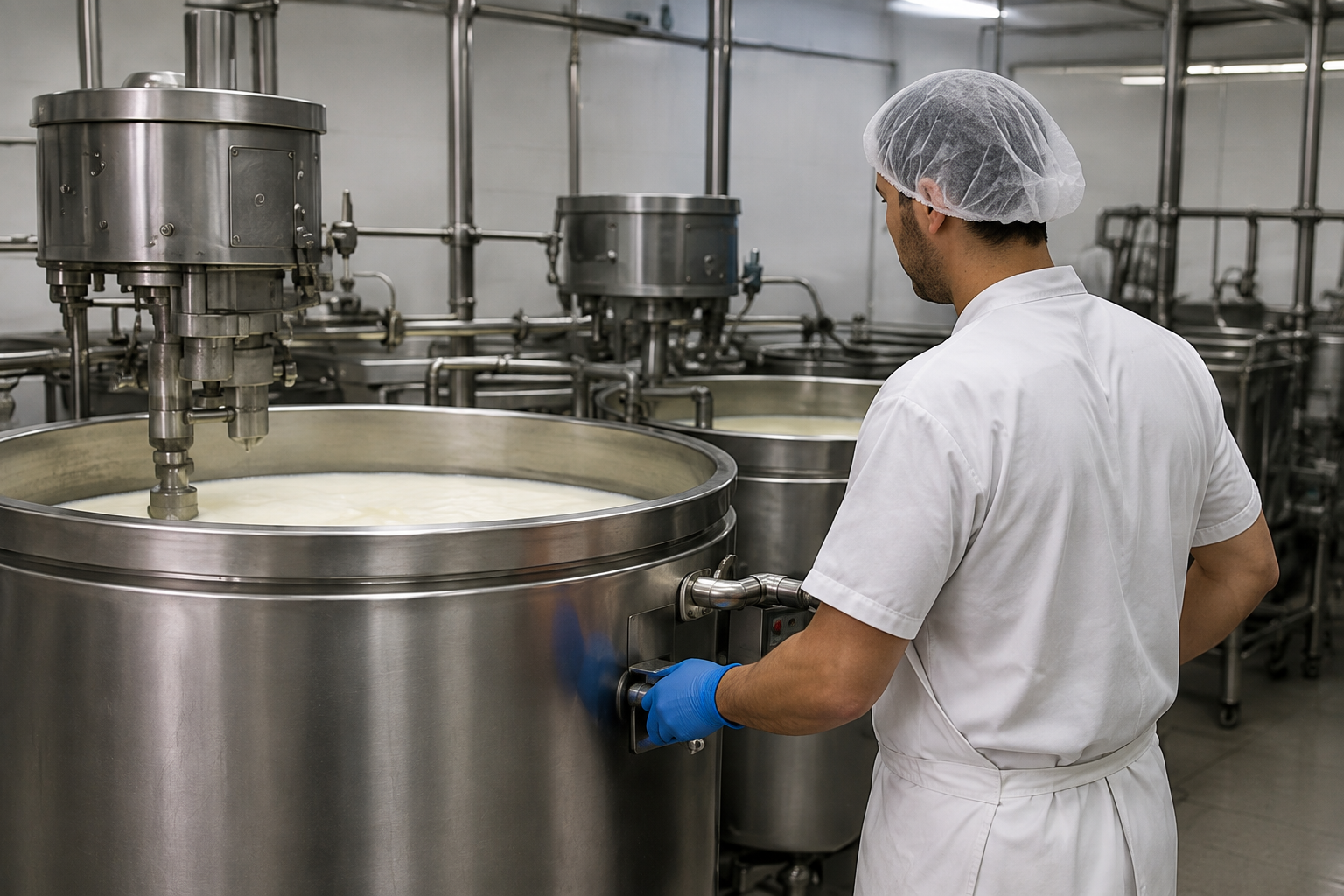
Process parameters, including time, temperature, mixing intensity, and system conditions, are controlled according to the cheese type and final product specifications to ensure more precise stabilizer performance and development of the desired product structure.
 06
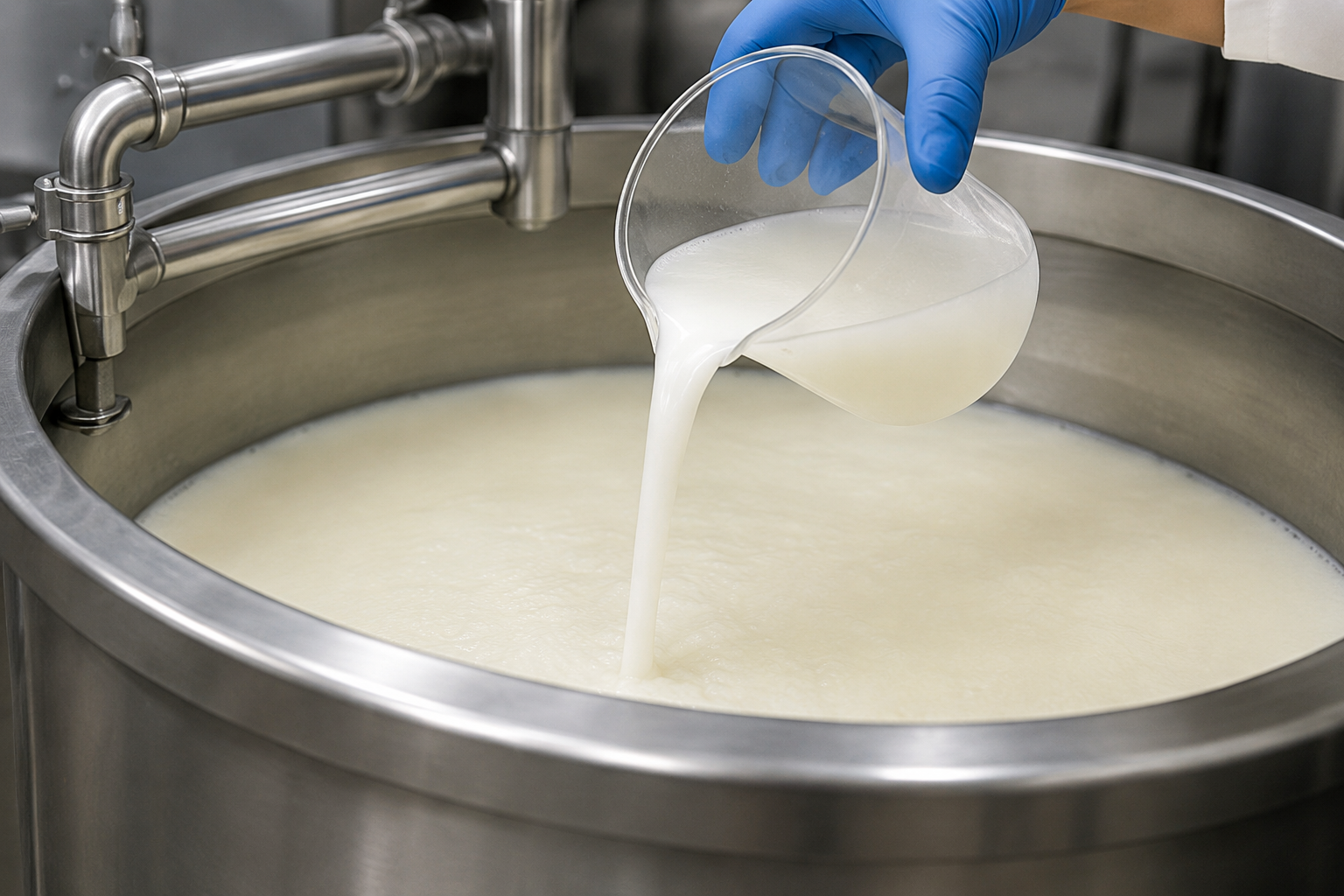
The physical structure of the cheese, texture uniformity, firmness, syneresis level, and product stability are evaluated to assess the performance of the stabilizing system and its suitability for the desired cheese characteristics.
 07
The final product is evaluated for uniformity, appearance, firmness, texture, stability, and syneresis level to ensure that the produced cheese meets the technical specifications and expected product characteristics.
 08
After the product specifications are approved, the cheese is prepared for further processing, packaging, storage, and distribution. At this stage, the quality and stability of the final product structure remain a key focus.
Explore technical product information, specifications, benefits, applications, and storage guidelines for cheese stabilizer systems used in the formulation of various cheeses and cheese-based products.
Cheese stabilizer is a specialized system designed to improve the texture, consistency, uniformity, and stability of cheese-based products. Depending on the cheese type, formulation, and production process conditions, it can be used to achieve the desired product structure.
Berandil cheese stabilizer is designed to help control syneresis, improve texture stability, increase structural uniformity, and control the physical behavior of the product throughout production and storage. This system can be used in the formulation of various cheeses, including cream cheese, processed cheese, molded cheese, and lactic cheese, according to the characteristics of the final product.
Cheese stabilizer is a specialized system designed for use in the formulation of various cheeses and cheese-based products. Its performance can be adjusted and designed according to the product type, expected structure, production process, equipment used, and final product characteristics.
1. Improved Moisture Management and Increased Water-Holding Capacity By controlling water distribution and retention within the product matrix, the stabilizer helps optimize Moisture Distribution and reduce Free Water Migration. This function plays an important role in controlling Syneresis and maintaining structural uniformity in various cheeses and Cheese-Based Products. 2. Optimization of Protein Matrix and Structural Integrity By strengthening and controlling interactions within the Protein–Hydrocolloid Network, the system helps improve the Structural Integrity of the product. This property can improve the resistance of the cheese matrix to Structural Breakdown, deformation, and deterioration of textural quality during production and storage. 3. Control of Rheological Properties and Improvement of Texture Profile Specialized stabilizer systems can regulate Viscosity, Yield Stress, and Viscoelastic Behavior, allowing more precise control of the Rheological Profile of cheese-based products. The result is a texture appropriate to the product type, ranging from Firm to Creamy and Spreadable structures. 4. Increased Emulsion Stability and Control of Fat Separation In cheese-based products containing complex fat and protein systems, controlling Fat–Protein Interactions is highly important. By improving Emulsion Stability and reducing the likelihood of Fat Coalescence and Oil Separation, the stabilizer helps create a more uniform Microstructure and greater product stability. 5. Improved Functional Performance and Increased Processing Stability The use of suitable stabilizing systems can improve product performance during different stages of Processing, Heating, Cooling, and Storage. Increased Processing Stability, maintenance of Texture Consistency, improved Sensory Attributes, and consistent quality throughout Shelf Life are among the key benefits of using stabilizers across a wide range of Cheese & Cheese-Derived Products.
To maintain the quality and performance of cheese stabilizer, the product should be stored according to the conditions stated on the packaging and the manufacturer's technical instructions. Proper storage conditions, including protection from moisture, contamination, and unsuitable environmental conditions, are important for maintaining the quality and performance of the raw material.
Store the cheese stabilizer in a dry environment and protect it from direct contact with moisture.
Prevent the product from being exposed to unsuitable environmental conditions and severe temperature fluctuations.
After opening the package, protect and store the product properly and according to the manufacturer's instructions.
Always check the production date, expiration date, and storage conditions stated on the cheese stabilizer packaging.
The exact storage conditions, shelf life, and usage level of cheese stabilizer must be determined and followed according to the information stated on the product packaging and the manufacturer's technical instructions.
In this section, we answer frequently asked technical questions about cheese stabilizers, their application in the cheese production process, texture and consistency control, reduction of syneresis, emulsion stability, and selecting a stabilizing system suitable for different types of cheese.
A cheese stabilizer is a functional system used to control and improve the physical characteristics of cheese. Depending on the product type and formulation, it can help create a uniform texture, achieve appropriate consistency, improve structural stability, reduce syneresis, and enhance the physical stability of the product. In different types of cheese, such as cream cheese, processed cheese, block cheese, and lactic cheese, the functional requirements of the stabilizer vary. The appropriate system should be selected based on the cheese type, moisture content, fat-to-water phase composition, and production process conditions.
The usage level of a cheese stabilizer is not a fixed value for all products. It depends on the cheese type, moisture content, fat and protein composition, desired textural characteristics, and processing conditions. For example, different levels may be required for various cream cheese, block cheese, lactic cheese, and processed cheese systems. The final dosage is best determined through laboratory trials and testing under actual production conditions to achieve an appropriate balance between consistency, texture, syneresis, and processability.
A cheese stabilizer can influence the distribution of water, the behavior of different phases, and the rheological properties of the product by creating and controlling the physical structure of the system. Selecting an appropriate stabilizing system can help create a soft and creamy texture in cream cheese or a more cohesive and controllable structure in certain block and processed cheeses. The type and level of stabilizer should be selected according to the target texture so that the final product provides the desired performance in terms of consistency, cohesiveness, and mouthfeel.
Syneresis in cheese can be affected by factors such as formulation composition, moisture content, protein structure, processing conditions, and storage conditions. An appropriate stabilizing system can help manage water within the product structure and improve the stability of the cheese matrix, thereby reducing the tendency of free water to separate. However, syneresis control does not depend solely on the stabilizer. Formulation, thermal processing, mixing, homogenization, and storage conditions should also be evaluated together.
Yes, cheese stabilizing systems can be designed and optimized for industrial applications, but a single system does not necessarily provide the same performance across all cheese types. In industrial cheese production, factors such as product type, production line capacity, mixing and processing equipment, moisture content, fat percentage, target structure, and storage conditions should be considered when selecting a stabilizer. Proper stabilizer system design can help improve texture uniformity and maintain consistent quality in industrial production.
For accurate cheese stabilizer selection, it is useful to provide information such as the cheese type, including cream cheese, processed, block, or lactic cheese; the base formulation; fat and moisture percentages; protein content; pH; thermal processing; mixing and homogenization equipment; processing temperature; filling and packaging method; and storage conditions. The main product issue should also be clearly identified, such as syneresis, loss of consistency, texture breakdown, reduced sliceability, phase separation, or structural changes during storage.
In cream cheese, the stabilizing system should be selected according to the target of creating a soft, delicate, and creamy texture while maintaining uniform consistency. Control of free water, stability of the fat and water phases, spreadability, mouthfeel, and structural integrity throughout storage are important criteria when designing a cream cheese stabilizer. Using an appropriate system can help reduce syneresis and maintain the product's textural quality throughout the storage period.
In processed cheese, the stability of the water and fat emulsion is an important factor in achieving a uniform structure and proper product performance. An appropriate stabilizing system can help promote more uniform distribution of the product phases, control the structure, reduce phase separation, and maintain textural properties. In addition to the stabilizer, the type of emulsifying agent, raw material composition, thermal conditions, mixing intensity, and melting and cooking process also influence the final performance of processed cheese.
Yes, the type and performance level of the stabilizing system can affect the cohesiveness of the cheese structure and consequently its sliceability and ability to retain its shape. In block cheeses and certain processed cheese products, moisture control and the formation of an appropriate structural network can help reduce breakage or deformation during slicing. However, sliceability does not depend solely on the stabilizer. Factors such as protein, fat, and moisture composition, pH, production process, and ripening or storage conditions also contribute to the final product characteristics.
A cheese stabilizer does not directly replace preservatives or food safety and shelf-life control processes. However, maintaining appropriate physical stability, reducing syneresis, preserving texture uniformity, and controlling phase separation can help maintain the physical quality of cheese during storage. The final shelf life of the product depends on a combination of factors such as formulation, microbial load, thermal processing, packaging, the cold chain, and storage conditions.
The possibility of providing a sample and conducting technical testing can be evaluated based on the cheese type, formulation, and production conditions. For an accurate evaluation of cheese stabilizer performance, it is recommended to provide the product specifications, production capacity, base formulation, processing equipment, and the existing quality issue. A suitable sample can then be evaluated under controlled conditions and, where possible, under actual production-line conditions to assess its performance in terms of texture, consistency, syneresis, stability, and other desired characteristics.
Berandil experts are ready to review your technical requirements, formulation, and cheese production process.
Your review will be displayed on the website after being reviewed by the Berandil team. Your experience with this product regarding performance, texture stability, consistency, syneresis, sliceability, and product quality can be valuable for manufacturers.